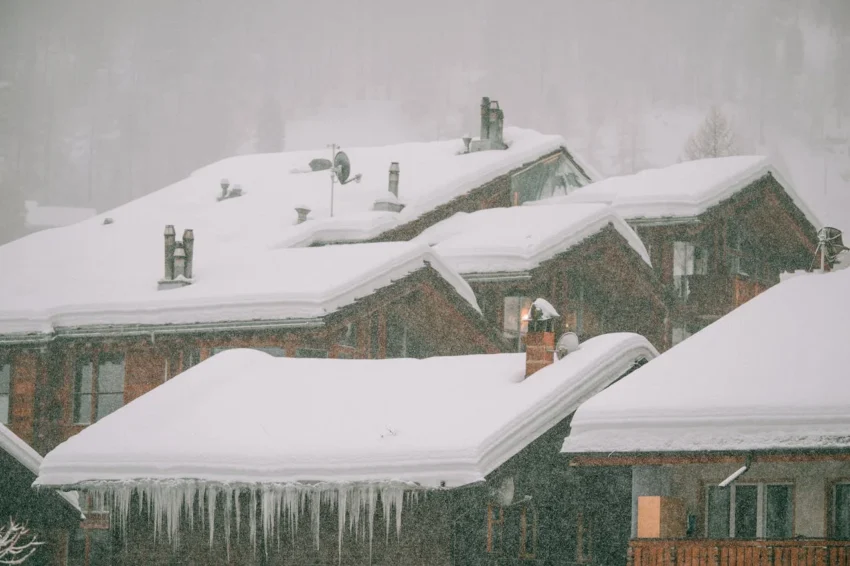
The air is a hollow, metallic weight. Outside, the world has vanished behind a veil of aggressive white—Winter Storm Fern is not just a weather event; it is a physical intervention. For the 230 million Americans currently under weather alerts, the frantic hum of the daily grind has been silenced. We are stranded. We are cold. And for the first time in months, we are permitted to be still.
Winter Storm Fern is a historic atmospheric event that forces a collective pause by disrupting high-speed infrastructure and digital dependency. It facilitates slow living by mandating a transition from external productivity to internal reflection. This “forced stillness” allows individuals to align with natural circadian rhythms, reduce cognitive load, and embrace analog presence during record-breaking cold.
The Biological Cost of the Constant Summer
We are the first generation of humans to attempt a permanent physiological summer. Through artificial light and climate control, we override our circadian rhythms, demanding peak neuroplasticity and output even when our biology begs for a “down-regulation.”
Our bodies are evolutionary masterpieces designed for seasonal ebb and flow. When we ignore this, we pay in cortisol and chronic burnout. Winter Storm Fern acts as a biological circuit breaker, forcing us into the “hibernation mode” our ancestors once used to mass their energies for spring.
The Cultural Trap of the Southern Plains
In cities like Little Rock, Arkansas—which just broke a snowfall record standing since 1899—the infrastructure isn’t built for this level of stillness. This geographic hook creates a unique cultural friction: we want to keep moving, but the current power outages by state remind us that we are ultimately subordinate to the climate.
When the Polar Vortex impacts our modern grid, it exposes the fragility of our “always-on” culture. We are trapped not by the snow, but by our own resistance to the pause. Slow living is the rebellious act of accepting the snowfall as a gift rather than a grievance.
How do I practice slow living during a blizzard?
The shift from panic to presence requires an intentional pivot. When the Wi-Fi flickers and the screens go dark, use this three-step ritual to reclaim your internal pace:
-
Audit the Silence: Turn off all background audio. Snow physically absorbs up to 60% of environmental noise; sit for ten minutes and listen to the literal sound of a quiet world.
-
Analog Presence: Engage in a tactile task that requires no electricity—kneading dough, journaling by window light, or organizing a physical drawer.
-
Low-Light Immersion: If you are part of the 1 million experiencing power outages, do not fight the dark. Light a single candle and allow your eyes to adjust to a “soft focus” that heals cognitive exhaustion.
The Winter Storm Fern Analog Kit
When the grid fails or the world simply feels too loud, we turn to the primitive and the tactile. This kit is not about survival in the clinical sense; it is about reclaiming the dignity of a slower existence while the frost thickens on the glass.
The Essential Tools
-
The Cast Iron Skillet: A heavy, reliable conductor of heat that works as well on a wood stove as it does on a gas range. It is the ultimate tool for slow, deliberate cooking.
-
Pure Beeswax Candles: Unlike synthetic scents, beeswax purifies the air and emits a warm, golden spectrum that mimics the sun, easing the seasonal depression that often follows a whiteout.
-
A Smythson or Midori Journal: Digital notes are ephemeral. There is a specific neuro-biological release that occurs when ink meets heavy paper during a power outage.
-
The Woolen Throw: Seek high-micron wool or cashmere. The weight of a natural fiber blanket provides sensory grounding, reducing the “fight or flight” response triggered by the storm.
-
The Manual Coffee Grinder: The rhythmic, physical act of grinding beans by hand is a morning meditation. It reminds us that the best things require effort and time.
Simple, Warm Recipes for the Hunker-Down
1. The “Stone House” Broth In a heavy pot, simmer whatever root vegetables remain in your pantry—carrots, onions, or a lonely potato—with a pinch of sea salt and a sprig of dried thyme. The goal is not a complex culinary feat, but a steaming bowl of mineral-rich hydration that warms the hands as much as the throat.
2. Skillet Bannock Bread A relic of travelers and woodsmen, this requires only flour, water, salt, and a dash of baking powder. Mix into a stiff dough and fry in your cast iron with a bit of butter until the edges are charred and the center is soft. It is the taste of self-reliance.
3. The Midnight Toddy Heat water until just before it boils. Add a slice of lemon, a teaspoon of raw honey, and a cinnamon stick. If the current power outages by state have left you in the dark, sip this by candlelight. The steam acts as a natural humidifier for lungs dried out by indoor heating.
The Counter-Intuitive Truth
There is a profound irony in the fact that we only feel “allowed” to rest when the National Weather Service issues a warning. We treat the snow day activities for adults as a guilty pleasure rather than a vital necessity.
The truth is that the world does not break when we stop. The Winter Storm Fern snow accumulation maps show us exactly where the world has paused, yet the earth remains. We do not need a disaster to justify a slow afternoon; we only need the courage to claim it.
The One-Minute Challenge
Open your door and stand on the threshold for sixty seconds. Feel the sub-zero air of the Polar Vortex against your skin. Acknowledge that you are alive, you are here, and for this moment, you have absolutely nowhere else to be.
