There’s a growing movement unfolding quietly in cafes, on porches, and across cozy, plant-filled bedrooms. It’s the sight of a young person scribbling into a leather-bound journal, reading a paperback, or brewing tea without checking their phone. You may have noticed it too. This isn’t just nostalgia. It’s the beginning of a quiet revolution—what many are calling the digital detox generation.
In a culture driven by instant updates and infinite scrolling, more and more people—especially Millennials and Gen Z—are turning away from screens and embracing analog lifestyles. These shifts aren’t anti-technology; they’re intentional choices to reclaim time, presence, and peace.
This article explores why young people are joining the Great Tech Rebellion and adopting slower, simpler ways of living. Along the way, we’ll share some practical digital detox rules, examine the emotional impact of disconnection, and offer tools for anyone ready to step back from the noise and step into a more intentional life.
Unplugging to Reconnect: The Appeal of Analog
It began for me with burnout. After months of working remotely, juggling multiple devices, and falling asleep to the blue light of my screen, I realized something had to change. I started leaving my phone in another room and bought a kitchen timer instead of using my phone alarm. I printed photos. I rediscovered writing by hand.
This return to analog wasn’t about rejecting tech altogether—it was about choosing presence.
Many young people are finding that real rest doesn’t come from binging Netflix or scrolling Instagram. It comes from boredom. From silence. From the warm hum of a vinyl record or the tactile pleasure of turning pages.
In this context, the digital detox becomes more than a break—it’s a lifestyle shift. A conscious rebellion against mindless consumption, and a return to meaning.
“When we slow down, we begin to notice again. And when we notice, we begin to feel more alive.”
Digital Detox Rules That Anchor the Movement
So what does this new analog-inspired lifestyle look like in practice? Below are key digital detox rules many are adopting to support their slow living journey.
1. Set Screen-Free Hours Each Day
Designate blocks of time—especially mornings and evenings—where no screens are allowed. This helps regulate cortisol, boosts clarity, and encourages real-world rituals.
2. Use Tech Like a Tool, Not a Companion
There are numerous Apps that can support mindfulness, but the phone shouldn’t be the main event. Keep it out of sight when engaging in activities like reading, journaling, or meals.
3. Reclaim Print Media
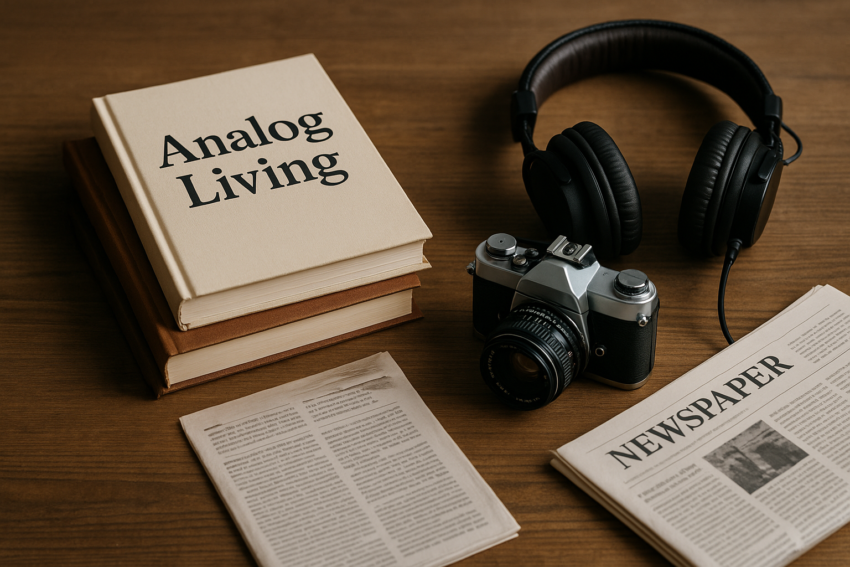
Subscribe to a physical newspaper. Keep a reading list and borrow from the library. Handwritten letters, recipe cards, and Polaroids offer a different kind of joy that digital minimalism embraces.
4. Schedule Weekly Digital Sabbaths
One day a week—often Sundays—is now sacred for many analog adopters. No social media. No email. Just quiet, creative, or nature-based living.
5. Curate Your Tech Use
Be selective about apps. Unfollow accounts that cause comparison. Use platforms that inspire. One of the underrated benefits of digital detox is that it encourages values-based consumption.
These aren’t rigid rules—they’re invitations to reconnect with yourself and your space.
Why Young People Are Craving the Slow Life
In a 2023 survey by Pew Research Center, 72% of adults under 30 reported feeling emotionally overwhelmed by technology. Many described feeling fragmented, overstimulated, or disconnected from themselves.
The analog lifestyle offers a balm. It taps into a longing for stillness, for physical connection, for depth. For many, how to unplug from technology becomes less about restriction and more about reconnection—with their bodies, their rhythms, their people.
Take 25-year-old Layla, who started a morning routine that includes tea, analog journaling, and 15 minutes of silence before checking her phone. “It changed everything,” she says. “I don’t feel hijacked by my day anymore and I’m grounded before I connect.”
Or Aaron, 19, who began developing film photography as a form of slow art. “It makes me see the world differently,” he says. “I’m not snapping a hundred shots—I’m noticing the light.”
These small shifts form the heartbeat of a slow living digital detox which is a movement led not by wellness influencers, but by everyday seekers hungry for a better way.
The Deeper Invitation: Why This Moment Matters
This isn’t just about unplugging from screens. It’s about unlearning speed. The past decade taught us to optimize, multitask, monetize, and perform. But now, something softer is calling.
We are learning that rest is productive. That slow is sustainable. That joy isn’t loud—it’s often silent.
Digital minimalism expert Cal Newport writes, “The key to thriving in a high-tech world is to spend much less time using technology.” And that’s what this generation is beginning to understand—not through fear, but through freedom.
By reclaiming time and focus, young people are redefining what success looks like. They’re trading clout for connection. Noise for nourishment. Haste for harmony.
And in that shift lies the real rebellion: a collective choice to tune out the algorithms and tune into life.
Looking Ahead: Choosing Presence Over Performance
If you’re feeling burnt out, distracted, or just exhausted by the digital grind, then you’re not alone. The beauty of this analog shift is that it doesn’t require perfection. Just a willingness to pause.
You can start small:
- Swap your phone alarm for a sunrise clock
- Begin your day screen-free for 30 minutes
- Write one page in a journal every night
- Cook from a paper recipe
These aren’t productivity hacks. They’re rituals of return. Moments of presence in a world that’s always performing.
The benefits of digital detox are subtle but powerful. You might sleep better. Think more clearly. Feel less anxious. Laugh more. Reconnect.
So here’s your invitation: take the rebellion personally. Choose presence. Choose paper. Choose slow.
“The slower we move, the deeper we feel. And the deeper we feel, the more alive we become.”
