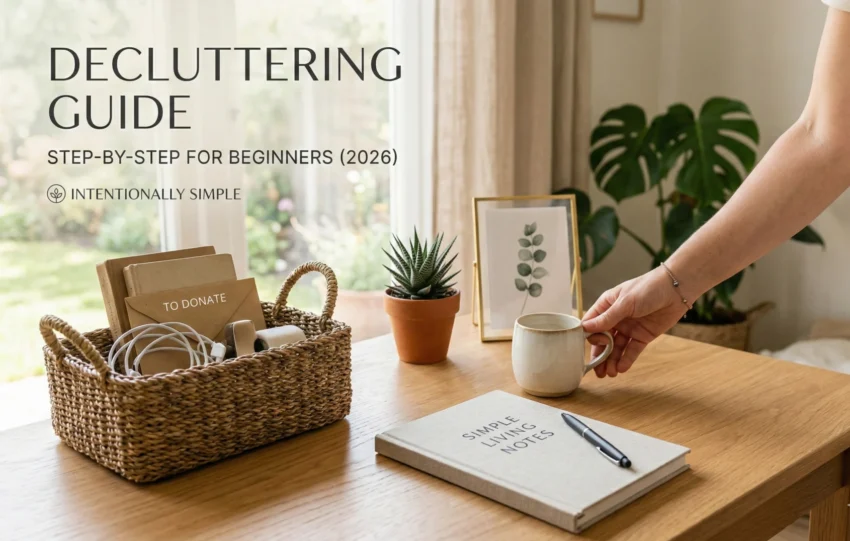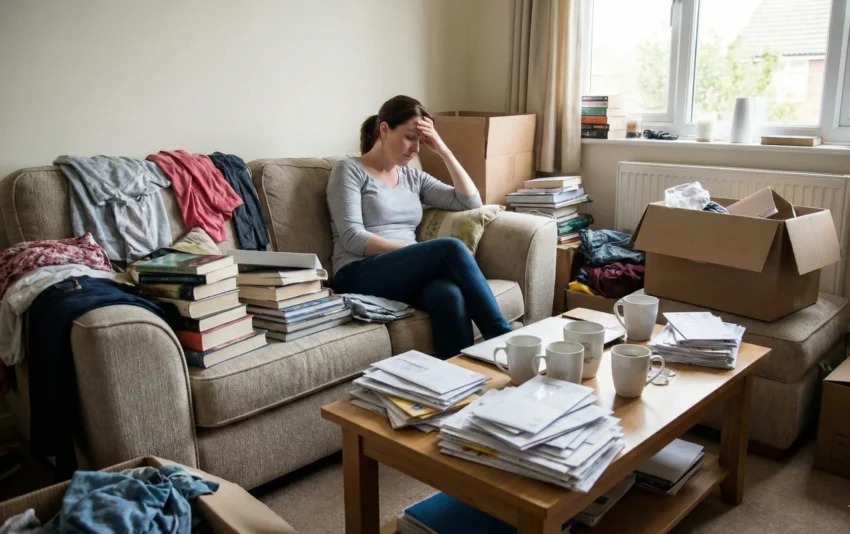
Decluttering your home is the intentional process of removing physical items that no longer serve a functional or emotional purpose. By reducing visual noise, you lower cortisol levels and improve cognitive focus. The most effective approach involves small, rhythmic sessions rather than marathon cleaning, focusing on letting go rather than just organizing. A landmark study…
Author: Willow Hart
Why you are Decluttering backwards . Here’s the Right Order
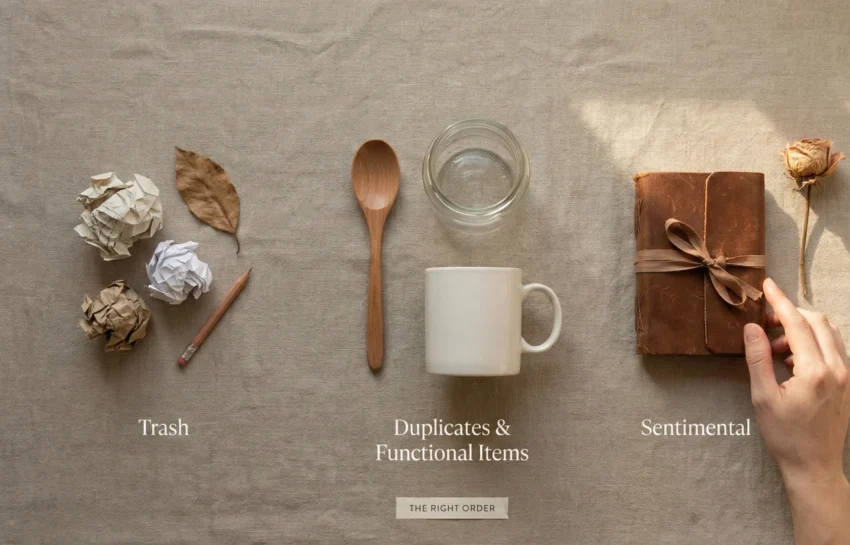
To learn how to declutter effectively, you must stop focusing on the volume of “stuff” and start with your easiest wins first. The right order begins with clear trash, moves to non-sentimental duplicates in the bathroom or pantry, and saves emotional items for last. This builds the decision-making muscle needed for a permanent lifestyle shift….
The 18-Minute Secret: How Overland Park is Reclaiming Slow Living For Its Residents
Hyperlocal urban slow living in Overland Park is the intentional design of a life where your essential needs—nature, nourishment, and community—are met within an 18-minute radius. It replaces the exhausting “commuter culture” with a high-trust, low-friction environment that prioritizes time-wealth over material speed, allowing residents to reclaim hours for mindful presence. Overland Park was recently…
Inside Dancing Rabbit Ecovillage: Why This Missouri Town Banned the Dollar for a Slower Life
The Dancing Rabbit Ecovillage lifestyle is a radical model of a slow community that uses an internal currency, called “Rabbits,” to foster local resilience. Located in Missouri, the village limits the use of federal dollars to decouple from global market stress, reduce its carbon footprint, and encourage residents to trade skills and goods directly with…
Slow Travel vs. Fast Travel: Why You Should Choose Depth Over Distance
Slow travel vs fast travel is a choice between checking off a list and actually living a story. Fast travel relies on speed and high-frequency movement to see “everything,” while slow travel focuses on staying in one location to absorb the local rhythm, reducing burnout and fostering authentic human connection. According to a 2023 study…
Is Slow Living In A Big City Possible?
Slow living in a big city is entirely possible by shifting focus from external speed to internal pace. It involves setting strict digital boundaries, choosing intentional transit, and finding “pockets of peace” in urban environments. You don’t need a cabin in the woods; you just need to audit your daily attention. According to environmental psychology…
What is a Digital Detox and Why You Need One?
A digital detox is a deliberate break from screens and devices to reduce stress and restore mental clarity. It’s not about rejecting technology—it’s about using it intentionally rather than compulsively. Your phone buzzes in your pocket—except it doesn’t. You reach for it anyway. You sit down with coffee and before the mug touches your lips,…
How to Embrace Slow Living: The Ultimate 2026 Guide to a Calmer Life
To embrace slow living, you must intentionally shift from a state of constant reaction to one of conscious presence. It involves auditing your daily commitments, curating your digital environment, and prioritizing quality over speed. By choosing depth over breadth, you reclaim your attention and align your daily actions with your core values. The sun hasn’t…
Is your “Smart Home” making you dumber?
Is your “Smart Home” making you dumber? I remember the first time my house decided to lock me out of the “Good Morning” scene. I was standing in my kitchen in London—one of those high-velocity hubs where we trade our soul for fiber-optic speeds—staring at a smart kettle that refused to boil because of a…
Why You Can’t Focus on a Book for More than 10 Minutes
You likely feel you can’t focus on reading anymore because your brain has been rewired for “hyper-responsiveness.” Constant digital notifications keep your amygdala—your brain’s emotional alarm—in a state of low-level panic. This creates a cortisol spike that makes the quiet, slow pace of a book feel physically uncomfortable compared to instant digital dopamine. Why the…