A landmark study from the Princeton University Neuroscience Institute found that physical clutter competes for your attention, significantly decreasing your brain’s ability to focus and process information. You know that heavy feeling in your chest when you walk through the front door? It’s not just work stress. It’s the visual noise of the pile of…

Author: Elowen Reed
If Your Space Feels Chaotic, Read This
To learn how to organize your home effectively, start by decluttering one small category at a time rather than a whole room. Focus on removing items that no longer serve your present self, then assign a “permanent home” to everything else. This reduces visual noise and creates a sustainable, functional environment. According to a study…
The Hidden Cost of Owning Too Much
The benefits of decluttering extend far beyond a tidy room; it is a vital practice for reclaiming mental bandwidth and reducing chronic stress. By removing physical excess, you lower cortisol levels, sharpen your focus, and eliminate the “visual noise” that leads to decision fatigue and emotional exhaustion in your daily life. According to a landmark…
The 10-10 Decluttering Method: A Quiet Revolution for the Overwhelmed Home
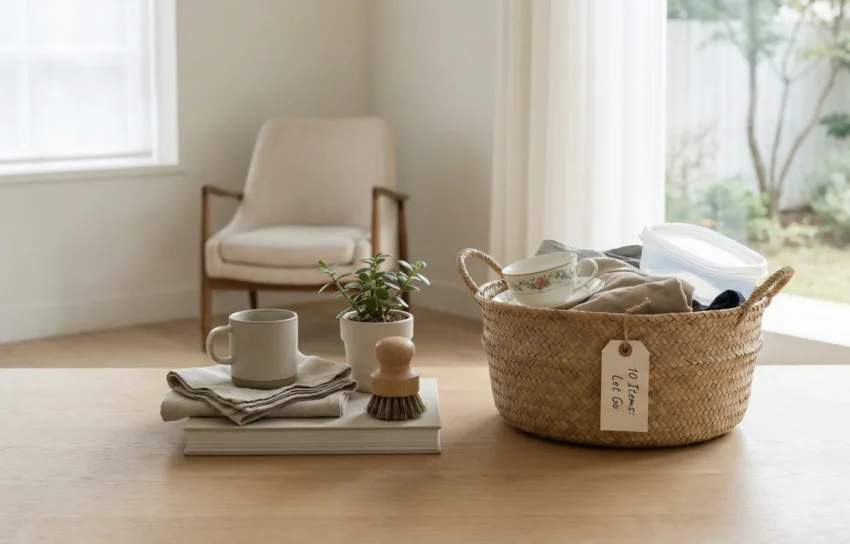
The 10-10 decluttering method (often called the 10-10-100 rule) is a 10-day challenge where you commit to removing 10 unnecessary items from your home every day. By focusing on small, manageable “bite-sized habits” rather than a total overhaul, you successfully remove 100 items in under two weeks without experiencing decision fatigue or emotional burnout. According…
Why Decluttering Feels So Emotional (It’s Not About the Stuff)
Letting go of possessions is difficult because our brains view objects as extensions of our identity and history. Emotional attachment to clutter stems from a survival instinct to preserve memories and security. By acknowledging the grief involved, we shift from “throwing things away” to “making space for who we are becoming.” Research from Yale University…
How to Plan a Slow Travel Itinerary for Meaningful Journeys
To plan a slow travel itinerary, select one “anchor” location for at least two to four weeks. Prioritize local neighborhoods over tourist hubs, leave 50% of your calendar unscheduled, and focus on daily rituals—like visiting the same bakery—to foster deep cultural immersion rather than surface-level sightseeing. Research by the World Tourism Organization (UNWTO) indicates that…
Unrushed: Reclaiming Your Time in a World of Fast Travel
Slow travel prioritizes connection over checklists. Unlike fast travel, which focuses on ticking off landmarks at high speed, slow travel emphasizes staying in one place longer, engaging with local culture, and prioritizing quality of experience. It is the conscious choice to trade a frantic itinerary for a deeper, more restorative human connection. The Journal of…
The Psychology of “Doomscrolling” at 2 AM
You doomscroll when tired because sleep deprivation weakens your prefrontal cortex—your brain’s “brakes”—leaving the impulsive amygdala in charge. This “biological friction” creates a loop where you seek digital certainty to soothe midnight anxiety, only to spike cortisol and further delay the sleep your brain desperately needs to reset. According to a 2025 study in Frontiers…
What I Learned After One Week of Living an Analog Lifestyle
“I love the idea of stepping away from screens, but how do you actually live without them? Wouldn’t I miss out on everything, from work emails to family group chats?” That was the skeptical voice in my head the day I decided to try an analog life experiment for one week. Like many people, I’ve…
10 Analog Lifestyle Habits to Try in a Digital World
The analog lifestyle might sound old-fashioned at first glance. After all, we live in a time where nearly everything is digitized, automated, and available at the swipe of a screen. Phones organize our days, watches track our sleep, and reminders buzz for every little task. With so much convenience at our fingertips, the idea of…