Slow living in a big city is entirely possible by shifting focus from external speed to internal pace. It involves setting strict digital boundaries, choosing intentional transit, and finding “pockets of peace” in urban environments. You don’t need a cabin in the woods; you just need to audit your daily attention.
According to environmental psychology research, even short “micro-breaks” in urban green spaces can lower cortisol levels by up to 15%, proving that city dwellers can access the physiological benefits of a slower pace.
The subway screeching, the endless hum of your neighbor’s AC, and the blue light of your phone keeping you awake at 1 AM. It feels like the city is designed to eat your attention. You might wonder how to practice slow living in a crowded city when the very air feels caffeinated. It’s easy to think you’re failing at mindfulness because you don’t live near a meadow. But slow living in a big city isn’t about the scenery; it’s about refusing to let the pavement dictate your pulse.
Many urban professionals seek slow living rituals to stop the burnout, often asking, “Can you be a minimalist in a tiny apartment?” while staring at a mountain of Amazon boxes. The secret isn’t escaping to the country; it’s reducing sensory overload in big cities by curated neglect. By finding budget-friendly slow living city tips, you can reclaim your morning coffee from the “grab-and-go” culture and turn it into a quiet rebellion.
A 2025 study published in Environmental Research found that long-term exposure to typical urban noise levels—above 53 decibels—sharply increases the risk of depression and anxiety, making intentional “quiet intervals” a biological necessity for city dwellers.
Why does the city make my brain feel fried?
Your brain wasn’t built for 10,000 advertisements a day. Living in a concrete jungle puts your nervous system in a state of “high alert.” A study from the University of Chicago found that city dwellers are 21% more likely to have anxiety disorders than those in rural areas.
Think of your brain’s “neuroplasticity”—or its ability to rewire its own habits—like a forest path. The more you rush, the deeper those “stress ruts” become. When you’re constantly dodging tourists or checking Slack on the bus, you’re paving a highway for cortisol. You aren’t tired; you’re overstimulated.
Is there a simpler way to practice slow living in a big city?
| The Old Way | The Intentionally Simple Way |
| Checking emails during the commute. | Looking out the window or listening to music with no lyrics. |
| Buying “convenience” meals every night. | Cooking one simple, 20-minute meal from scratch. |
| Saying “yes” to every happy hour. | Protecting two nights a week for absolutely nothing. |
| Scrolling until your eyes ache. | Putting the phone in a drawer at 8 PM. |
Check our Mindful Living Category for more helpful posts on Slow Living.
How do I start slow living in a city today?
You don’t need to quit your job. You just need a few “unnegotiable” anchors to keep you grounded when the world feels loud.
-
The Phone-Free Commute: Leave your phone in your bag. Notice three architectural details on your walk you’ve never seen before.
-
The Single-Task Lunch: Eat your food without a screen. Actually taste the salt, the crunch, and the heat.
-
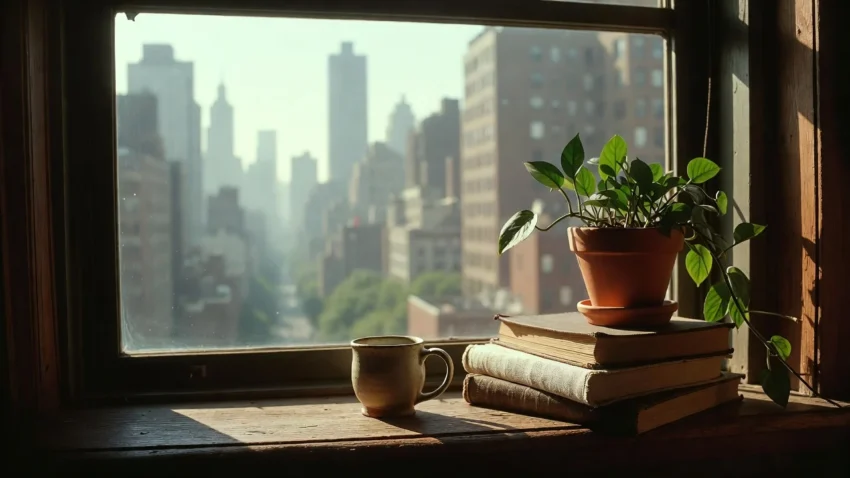
The Window Ritual: Spend five minutes every morning looking at the sky—even if it’s just the patch of blue between two skyscrapers.
The Counter-Intuitive Truth
Real slow living is a rebellious act of “no.” In a city that profits from your distraction, being “unproductive” for an hour is a radical move. You don’t need a farmhouse to be intentional; a studio apartment with a single candle and a clear mind is just as sacred. Minimalism isn’t about what you own; it’s about what you allow to occupy your head.
Frequently Asked Questions
How to disconnect while living in a tech hub?
Set “analog zones.” Designate your bedroom or dining table as a tech-free space. Use a physical alarm clock instead of your phone to ensure your first and last thoughts of the day aren’t dictated by an algorithm.
Can you be a minimalist in a tiny apartment?
Yes. Minimalism in small spaces is about “one in, one out.” Instead of organizing clutter, remove it. Focus on high-quality items that serve multiple purposes, and remember that empty space is a luxury, not a vacuum to fill.
What are budget-friendly slow living city tips?
Slow living is actually cheaper. It looks like visiting public libraries, walking instead of Ubering, and enjoying free public parks. True “slow” moments—like people-watching on a park bench—don’t cost a dime but offer the highest mental ROI.
The One-Minute Challenge
Tonight, when you get home, leave your shoes at the door and sit in total silence for exactly sixty seconds before turning on any lights or tech. Just one minute to let the city noise settle.
